Annie Isabella Broude is the 2nd (or possibly 3rd) wife of Aaron Levin, my maternal 2x great grandfather. Levin family HERE. Broude family HERE. Known variously as Annie Bella, Isabella, and Hinde Bella on her tombstone
Born: 1856 in Roshki, a village near Svislach in the Grodno district, Russian Empire, now Roski Sialiec in Belarus. Her age differs in various documents, suggesting she was born sometime between 1855 and 1857
Hebrew name: Hinda Beila daughter of Dov
Migration: Annie came to Liverpool in 1884 at about age 28 with her husband Aaron and his two sons and two daughters. Aaron was a Rabbinical teacher and came out with Annie's brother, Samuel Broude and taught at a Hebrew school
Married
Aaron Levin in Poland about 1881
Children
- an infant who probably died before 1884
- Leah Lillian Levin 1888 - 1972
- Abraham Levin 1891 - 1954
Aaron was previously married to Gertrude and they had the following children who Annie then helped raise: Simon, Jacob, Rachel, Esther and Sarah
Occupation: Butcher
Census details
1891
The Levin family is at 88 Richmond Row, Liverpool, England. Aaron is age 48, a furniture broker and Isabella is age 33. The children are Jacob, age 19, born in Russia and a draper, Rachel age 17 born in Russia and a shopkeeper, Esther age 13 born in Russia, Sarah age 11 born in Russia, Leah age 4 born in Liverpool and Abraham age 1 month born in Liverpool. There are also 3 boarders; Isaac Broady age 48 and a commercial traveller (also a distant cousin of Isabella), Nap Finestone age 32, Judah Rapmorly age 26 and Sarah Menca age 40, a sick nurse
.jpg)
The family is living at 41 Pembroke Place, Liverpool, England. Aaron is 58 and a butcher. Isabella is age 45. The children are Leah age 20 and Abraham age 10. Lodging with them is Wolfe Rabinowitz age 46 and also a butcher
.jpg)
1911
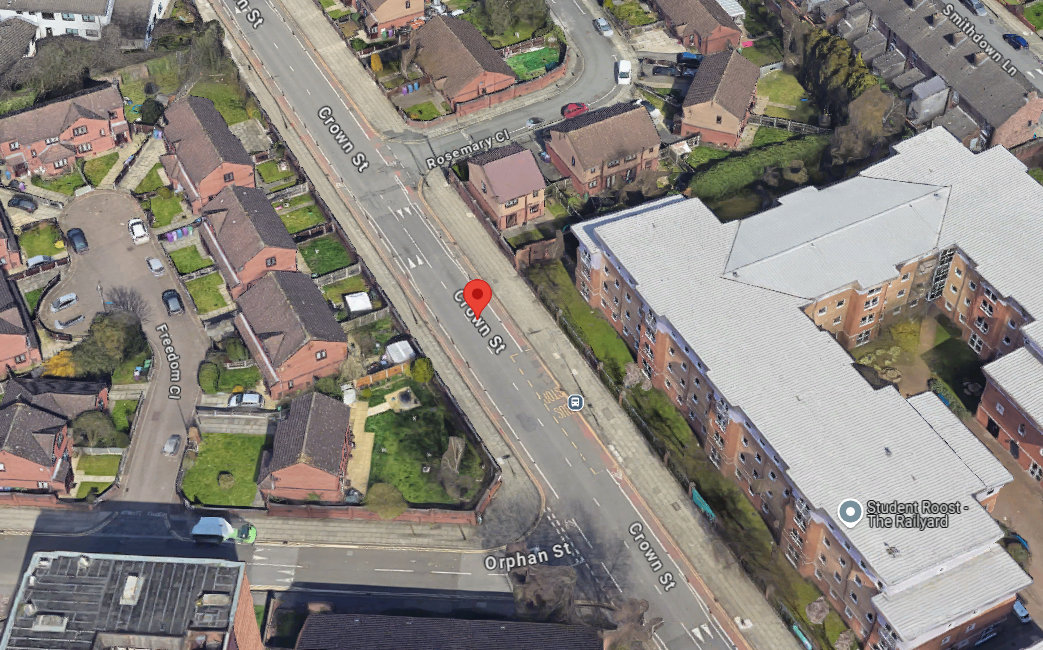
The family is living in a seven room house at 78 Crown Street, Liverpool, England. Aaron died the previous year and Annie is a widow age 56 and running a butcher shop from the premises. Living with her are her daughter Leah age 23 and her son Abraham age 20. The records states that her marriage to Aaron lasted 29 years - so married in about 1881/2 - and that she has had three children in that marriage, two of which are still alive. I can find no record of a deceased child suggesting that a child might have died very young in the early 1880s before they came to England
.jpg)
1921
The family is living at 206 Brownslow Hill, Liverpool, England. Annie is age 64 and running a butcher's shop. Leah is age 30 and visiting them is Bessie Rudnik, age 16

.jpg)
Death
3 August 1939 in Liverpool, England at 81 years of age if born in 1858, 84 years of age if born in 1855. She was buried in the Rice Lane Cemetery, Liverpool, England, on 4 August 1939 in plot no C3.19

Liverpool Jewish Burial Record for Annie Levin
.jpg)
Tombstone inscription: In affectionate memory of Hinda Bella the beloved wife of Aaron Levin died AB 19 5699 aged 84. Mourned by her son, daughters and grandchildren. A faithful mother of Israel
Hebrew translation: [Here is buried] the esteemed woman, modest in her ways, Hinda Beila, daughter of Dov, who ascended to Heaven on Friday, 19 Menachem Av 5699 (1939). May her soul be bound up in the bond of (eternal) life.
Last Will and Testament

Probate

Place of Birth

SVISLOCH (Pol. Swisłocz ), town in Grodno district, Belarus; within Poland before 1795 and between the two world wars. A number of Jews settled there at the beginning of the 18th century on the invitation of the owners of the locality, the princes of Tyszkiewicz. In 1752 the Council of Lithuania imposed a poll tax of 215 zlotys on the Svisloch community, which numbered 220 in 1766. Until the middle of the 19th century the Jews of Svisloch earned their livelihood mainly from trade in timber and grain, shopkeeping, and crafts; they later also engaged in innkeeping and the lease of public houses. After a great fire, in which most of the Jewish shops were destroyed, the fairs were no longer held in Svisloch and the Jews were deprived of their principal sources of livelihood. Around 1870 Jews began to pioneer in the tanning industry and improved methods of manufacture with the assistance of German experts whom they invited. By the end of the 19th century a number of tanneries had been established in Svisloch, which employed hundreds of workers. Many Jews from the surrounding areas went there in search of employment. As early as the middle of the 19th century Jewish craftsmen in Svisloch attempted to organize themselves into guilds. At the beginning of the 20th century the Bund Movement developed in Svisloch and it embraced the whole of the Jewish working populace (tanners, tailors, shoemakers, carpenters. smiths, and bakers), who organized strikes for the amelioration of working conditions in tanneries and factories. In 1905 the workers' organization was established for Jewish self-defense against pogroms.
Residences




.jpg)
.jpg)

